Our data centre infrastructure upgrade
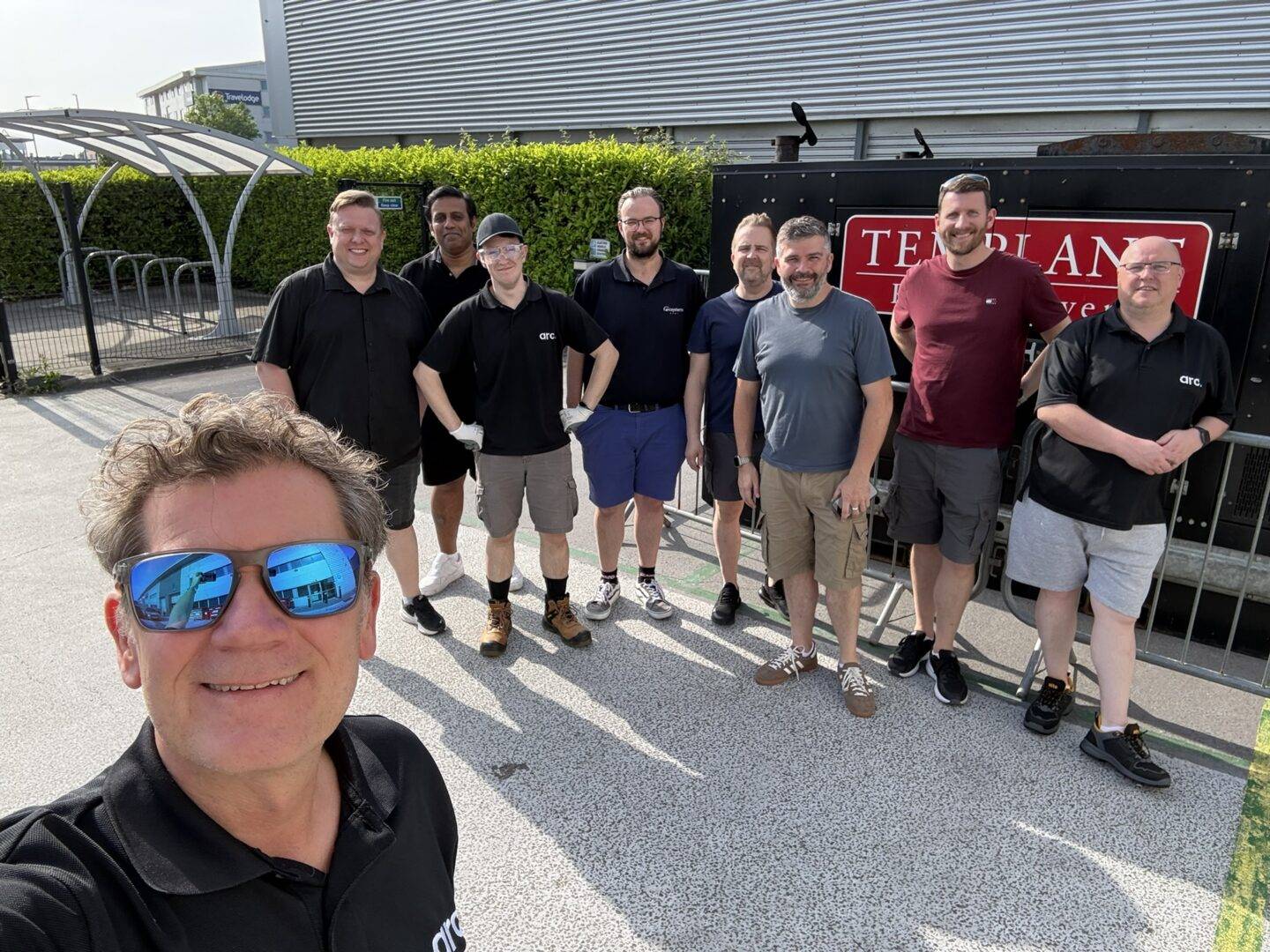
Last week, we successfully completed a major upgrade and modernisation of our Basildon data centre infrastructure, delivering significant improvements in resilience, operational efficiency, energy consumption and future scalability.
This project reflects our continued commitment to delivering smarter, more efficient solutions for modern data environments.
Here’s an insight into the project, the outcomes and insights from our team members involved.
Background
The upgrade program began approximately two years before delivery, with our team engaging several specialist data centre contractors before appointing Infiniti following a competitive tender process.
Matthew Clayden, Lead Technical Consultant, explained: “As a business, we wanted a partner who could deliver a more proactive and forward-thinking approach to data centre operations and long-term infrastructure strategy. Efficiency improvements, power savings, visibility and future expansion capability were all identified as key project objectives.”
The project was delivered collaboratively between Arc and Infiniti, led operationally by Sam Raveendran, Arc’s Project Delivery Manager, and Pete Sands, Technical Director at Infiniti.
The challenge
Our existing infrastructure was approaching capacity and end-of-life in several critical areas. The legacy cooling environment could only support approximately 35–40kW of IT load in an N+1 configuration, while the UPS and electrical distribution systems limited future growth.
Our Basildon data centre required a full infrastructure refresh while maintaining service availability for live customer workloads. The challenge was not only to modernise the environment, but to do so with zero unplanned downtime.
Planning
The planning phase lasted more than six months and was, at its core, a structured risk mitigation exercise. Rather than committing to a single approach, our teams developed several high-level delivery plans and worked through each in detail, stress-testing assumptions, identifying dependencies and mapping failure scenarios, before settling on the approach that was ultimately executed.
The chosen plan was selected for one primary reason: it was the only approach that delivered zero unplanned downtime while most effectively mitigating risk from both Arc’s operational perspective and that of its customers.
Mark Crowley, Head of Platform & Infrastructure, explained: “We didn’t start with a plan and try to make it work: we started with the outcome we needed and built the plan around that. Several options were on the table and we worked through each of them properly. The one we chose wasn’t necessarily the simplest to execute, but it was the one that gave us and our customers the greatest protection.”
The resulting delivery framework was built around formal Go / No-Go governance checkpoints, detailed micro-plan runbooks with defined sequencing and rollback criteria, temporary generators and cooling systems to maintain resilience throughout, and centralised command and control across all contractors and engineering teams. Hypercare support was in place during and after each migration event, and all infrastructure, network and operational teams remained aligned through structured communications and escalation processes throughout.
Alongside the delivery planning, we implemented significantly more aggressive backup and disaster recovery schedules in the lead-up to the migration events. Should the worst have occurred, this ensured that recovery time and recovery point objectives were kept as low as possible: an important layer of assurance that ran alongside the operational risk controls throughout the programme.
The upgrade programme
The project was delivered across three primary workstreams.
1. Cooling infrastructure upgrade
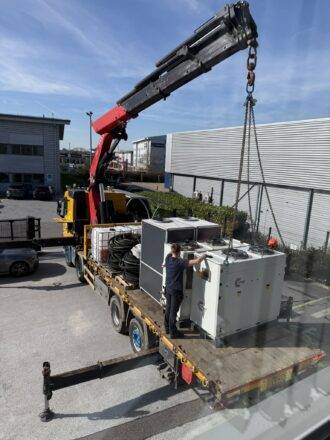
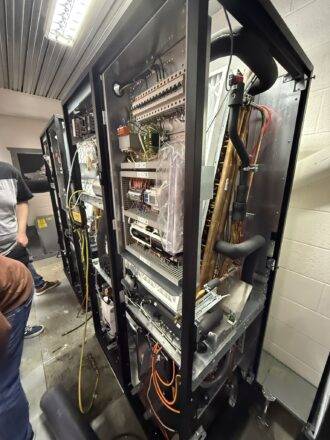
The legacy cooling systems were replaced with new FläktGroup hybrid free-cooling units, increasing total cooling capacity from approximately 40kW N+1 to 64kW N+1. Each unit combines a glycol-based circuit using an external dry air cooler with a direct expansion (DX) compressor circuit as a secondary stage, significantly reducing compressor usage and improving energy efficiency and resilience.
2. Power infrastructure modernisation
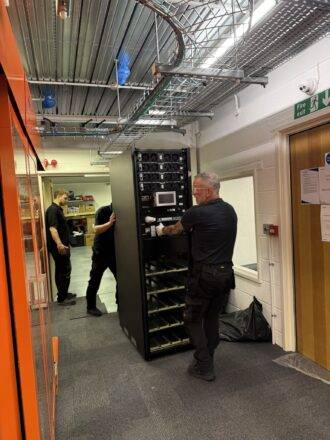
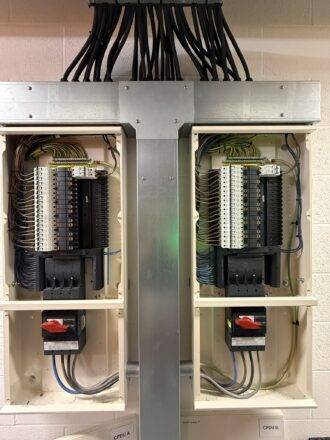
We upgraded the UPS and PDU environment, replacing the previous 40kW UPS platform with a new Riello 75kW modular N+1 UPS system. New PDU boards, intelligent PDUs and dual 32A overhead cabinet feeds were deployed across the data hall, replacing the previous dual 16A feeds and increasing cabinet density from approximately 3kW per cabinet to up to 7kW per cabinet.
This phase represented the highest operational risk, requiring the live migration of the data centre onto temporary generator power while the UPS and electrical infrastructure were replaced and commissioned.
3. DCIM & monitoring
We also began replacing the legacy BMS environment with a modern DCIM platform, providing significantly deeper telemetry, power visibility and operational monitoring. The new monitoring environment will support improved efficiency management, capacity planning and long-term operational optimisation.
Energy efficiency and environmental impact
Each unit combines two independent cooling circuits: a glycol-based circuit that rejects heat via an external dry air cooler using ambient air, and a direct expansion (DX) compressor circuit as a secondary stage. Under normal UK conditions, the glycol circuit handles the cooling load without the compressor running at all. The DX circuit only begins to engage when ambient temperatures exceed approximately 22°C meaning that, for the majority of the year, the data centre is cooled with minimal compressor usage. This significantly reduces compressor running hours compared to the legacy DX-only system, with a direct and measurable impact on both energy consumption and operational costs.
This efficiency improvement is also reflected in the data centre’s PUE, which has improved from 1.32 to 1.08, meaning a far greater proportion of incoming power now reaches the IT load directly, rather than being consumed by the supporting infrastructure. Arc also operates on a Zero Carbon Electricity tariff, meaning the entire facility is backed by renewable energy guarantees, further strengthening its environmental credentials.
The results
The project was completed successfully with zero unplanned downtime across both major upgrade events.
Key outcomes included:
- Cooling capacity increased from approximately 40kW N+1 to 64kW N+1
- UPS capacity increased from 40kW N+1 to 75kW N+1
- Cabinet density capability increased from 3kW to 7kW per cabinet
- Estimated PUE improved from 1.32 to 1.08
- Significantly improved power capacity and future growth headroom
- Greater resilience through N+1 redundancy across cooling and UPS systems
- Enhanced telemetry, monitoring and operational visibility
- Reduced operational energy consumption and improved efficiency
Temporary cooling systems and generators ensured the data centre remained fully operational throughout the migration process.
Risk mitigation and the generator switchover
Of all the migration events across the programme, the switchover of the PDU A feeds onto temporary generator power represented the single highest risk activity and, uniquely, it had to be carried out with the data centre fully live.
What made this particularly significant was that the Basildon data centre had never experienced a full loss of either a PDU A or PDU B feed across all cabinets. There was no operational precedent to draw on: no previous incident that had tested how the environment would respond. The team were, in effect, executing a controlled version of a scenario that had never occurred.
To manage this, the planning went far beyond high-level sequencing. The team mapped out exactly which cabinets to power down first, ordered by amp loading, progressively reducing the demand on the infrastructure before the switchover took place. Every step was deliberate, every decision documented and every contingency considered.
Matthew Clayden, Lead Technical Consultant, explained: “The switchover of the PDU feeds was the culmination of months of planning. By the time we reached the migration weekend, every major risk had been identified, discussed and mitigated. That preparation gave us the confidence to execute the change knowing we had done everything possible to protect customer services.”
Mark Crowley added: “This was the moment the planning really had to count. We’d never had a full PDU feed failure across the floor before, so we had no real-world reference point. We planned it down to which cabinet to touch first based on the amp loading, reducing the impact progressively so that by the time we made the switch, we’d taken as much risk off the table as we possibly could. It went exactly to plan.”
The switchover was completed without incident, zero unplanned downtime and no close calls.
Out-of-hours works
The out-of-hours programme played a critical role in de-risking the main migration events. Rather than arriving at the migration weekends with unknowns still in the environment, the team took a systematic approach, working through the data centre methodically in advance to resolve as many variables as possible before the highest-risk activities took place.
A key decision taken during planning was to replace all cabinet PDUs ahead of the main event. This proved to be one of the most effective mitigations of the programme. By replacing the PDUs progressively, any issues with individual cabinets could be identified and remediated as the team worked through the floor, rather than surfacing unexpectedly during the live migration window. By the time the main event arrived, the team had a much clearer and more confident picture of the environment they were working in.
Alongside this, we significantly increased the frequency of our backup and disaster recovery runs throughout the out-of-hours period, ensuring that exposure was minimised at every stage and that recovery options remained as strong as possible going into each migration event.
Mark Crowley said: “Replacing the cab PDUs beforehand was a big call, but the right one. It meant we could deal with any issues on our own terms rather than in the middle of a live switchover. By the time we got to the main events, we’d taken a huge amount of uncertainty out of the equation.”
Lessons learned
The successful delivery of the Basildon upgrade programme carried lessons that will shape how we approach complex infrastructure projects in the future.
The most significant was the value of the long run-up. Taking the time to properly plan – not just at a high level, but getting genuinely into the detail – made a material difference to the outcome. It’s easy to underestimate how much complexity sits beneath the surface of a live infrastructure migration, and the discipline to work through that complexity before committing to execution is what separates a well-managed programme from an unnecessarily risky one.
Equally important was the decision to involve more people at an early stage. Bringing in the wider operational and engineering teams from the outset meant that those closest to individual systems and workloads understood the risks and dependencies in their own areas , and could contribute to the planning rather than simply being briefed on it at the last minute. That breadth of early involvement directly improved the quality of the plan and the confidence of the team executing it.
Mark Crowley added: “The lesson is to take the time. It’s hard to think of everything, but the earlier you involve people, the better your chances of getting close. The detail we put into the planning phase is what gave us the confidence to execute and, ultimately, what made the difference between this being a success and it being a very stressful weekend.”
Conclusion
The successful completion of the Basildon data centre upgrade represents a major strategic investment for Arc and a significant demonstration of what careful, disciplined programme management can achieve in a live operational environment.
The new infrastructure delivers tangible, measurable improvements: cooling capacity increased by 60% and UPS capacity nearly doubled, cabinet density more than doubled, and PUE improved from 1.32 to 1.08. But the numbers only tell part of the story. The programme was built on a foundation of rigorous planning, honest risk assessment, and the decision to involve the right people at every stage, from contractor selection through to the final switchover.
Executing a controlled live migration of this complexity, including a PDU feed switchover that had no operational precedent in the environment, with zero unplanned downtime is not an accident. It’s the product of the months of preparation, out-of-hours work and detailed engineering that preceded it.
Matthew Clayden reflected: “The most pleasing aspect of the project was that we achieved exactly what we set out to do. The platform now gives us the headroom, resilience and operational visibility we need for the next phase of growth. Huge credit must go to the Arc, Infiniti and third-party teams involved in planning, delivering and executing such a complex project. The level of collaboration, preparation and professionalism shown throughout was exceptional.”
Pete Sands, Technical Director at Infiniti also commented: “As a data centre design and construction company, it doesn’t get much more complex than upgrading cabinet feeds, UPS and cooling systems within a live data centre environment. Every risk must be identified, assessed and mitigated, because downtime is simply not an option. Projects of this nature are only successful when the client and contractor work as one team. That was very much the case throughout this programme. Arc’s highly skilled team played a vital role in both the planning and execution phases, and the collaborative approach taken by everyone involved was fundamental to the project’s success. We always prefer to work with our clients, not simply for them, and this project was a great example of what can be achieved when that partnership approach is embraced from the outset.”
Beyond the technical improvements, the project has fundamentally changed our ability to scale. The upgraded platform provides significantly greater power and cooling headroom, improved operational visibility and a more efficient operating model, creating a strong foundation for future growth across colocation, cloud and AI-ready infrastructure services.
Most importantly, the programme also demonstrated that even highly complex live infrastructure transformations can be delivered successfully when supported by rigorous planning, collaborative partnerships and disciplined execution.
More broadly, it sets a benchmark for how Arc approaches complex infrastructure programmes going forward. Got a complex project in mind? Talk to our team here.
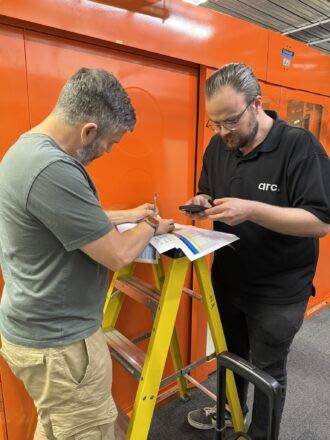
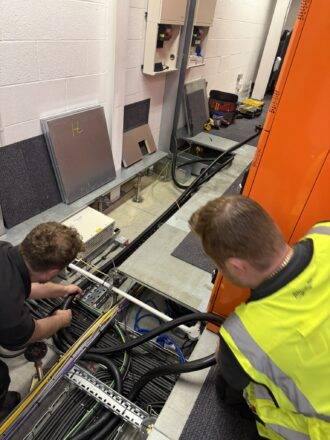
Well done to everyone making this project a success! Here’s some photos from behind the scenes.